For families & teachers
Why is a year different on each planet?
A planet’s year is the time it takes to travel once around the Sun. The planets follow different paths at different speeds, so their years have different lengths.
Try the adventure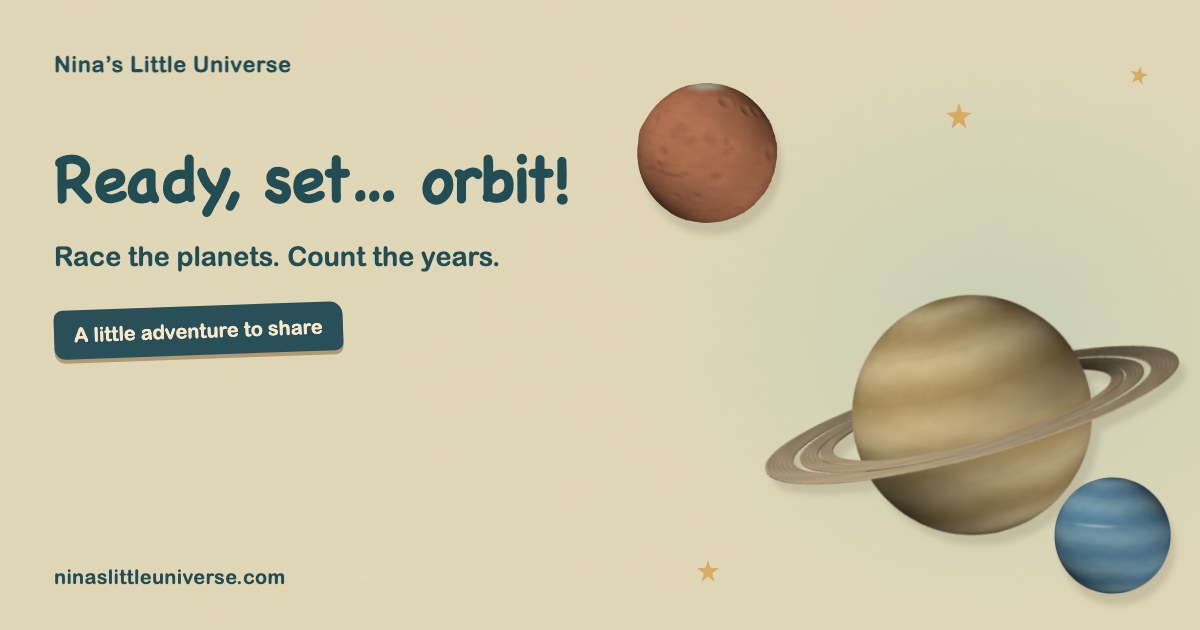
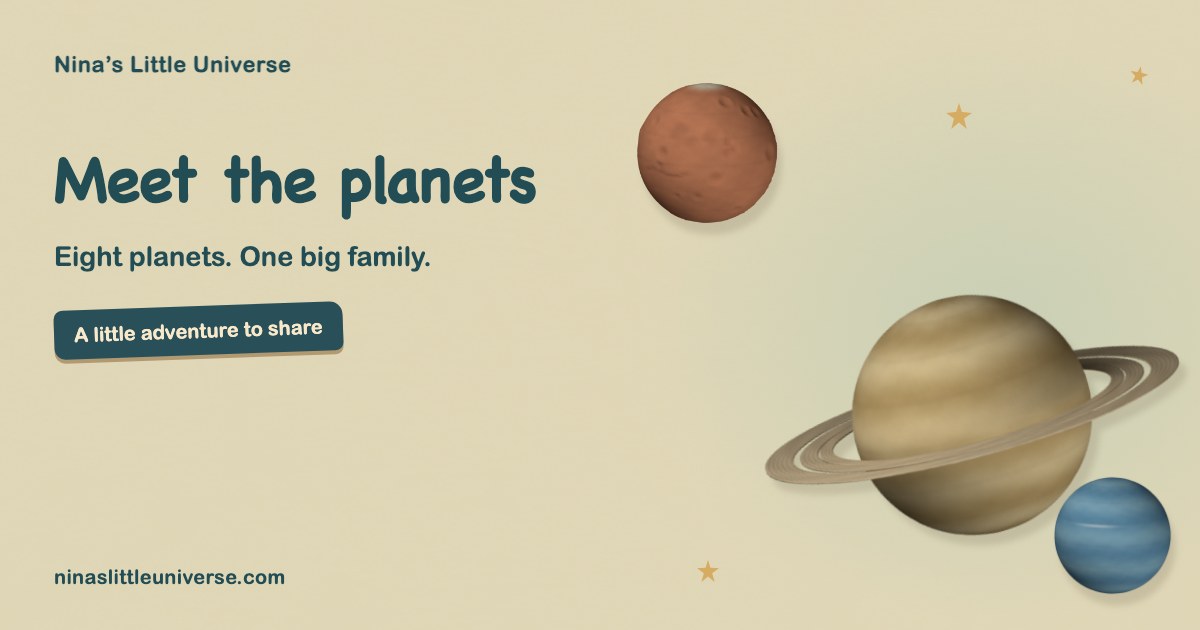
Earth takes about 365 days to complete one orbit. Mercury, the closest planet to the Sun, takes about 88 Earth days. Neptune, farthest of the eight planets, takes about 165 Earth years. More distant planets have longer paths and move more slowly around the Sun. An orbit is not a solid track: gravity bends the path of a moving planet. We draw a line in a model to help our eyes follow the journey.
Explore together
- Open the orbit activity and start the planets, or advance with the +1 Earth year button. Pick one planet to follow with your eyes.
- Watch its year counter as it completes a trip around the Sun. Compare it with a planet on a different orbit.
- Reset the race and predict which planet will finish the most trips in the same amount of time. Run it again to check.
One thing to remember
A day and a year measure different motions. Turning on an axis helps explain days; travelling around the Sun defines a planetary year. The model speeds up time and simplifies the distances so you can compare several worlds during a short activity. The orbit lines are guides, not objects in space.
Science reference: NASA ↗