For families & teachers
What happens during an eclipse?
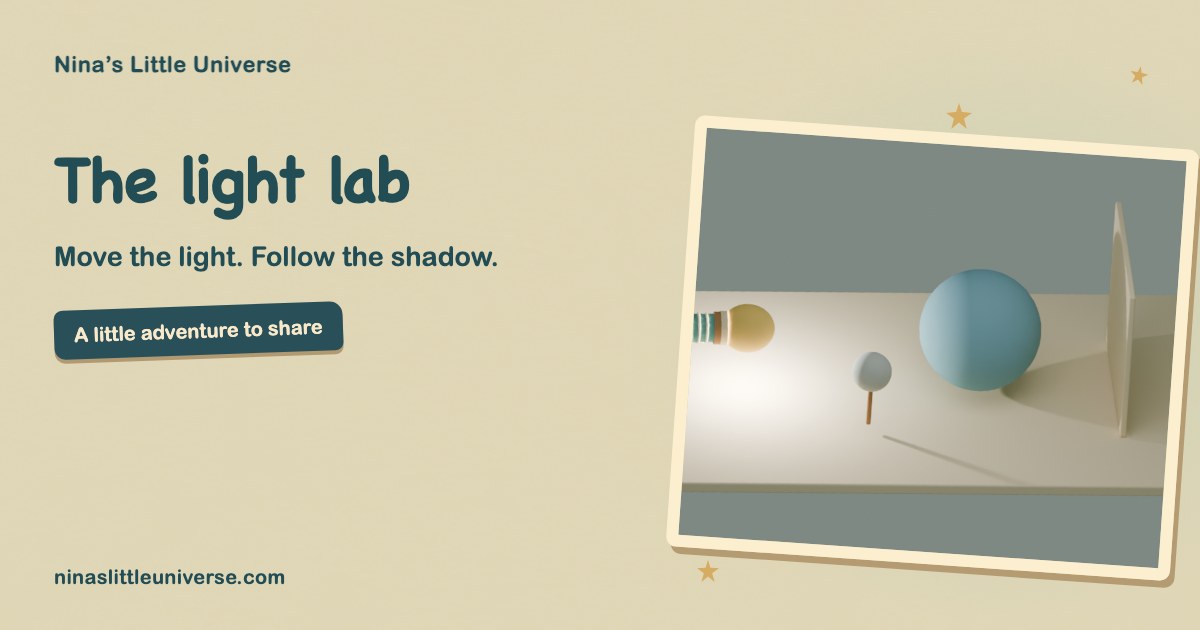
An eclipse happens when one world moves into another world’s shadow. A solar eclipse puts the Moon between the Sun and Earth. A lunar eclipse puts Earth between the Sun and Moon.
Try the adventure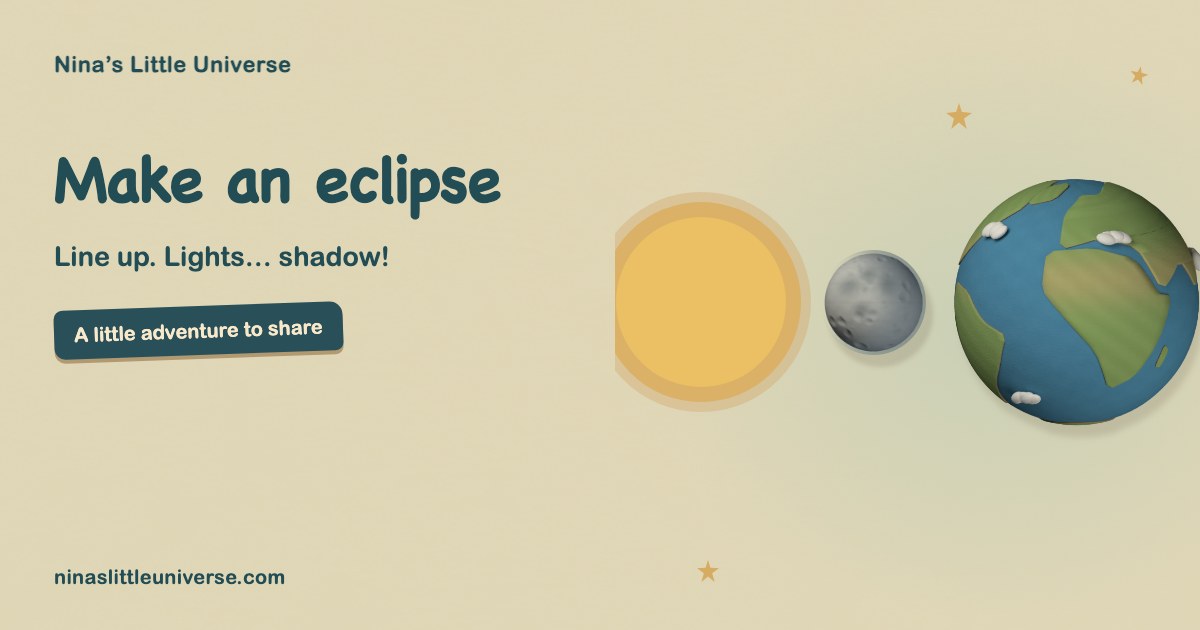
During a solar eclipse, the Moon blocks some sunlight and casts a shadow on part of Earth. People in that shadow see the Sun partly or completely covered, depending on their location and the alignment. During a lunar eclipse, the Moon passes through Earth’s shadow. The Moon’s orbit is tilted, so it usually travels above or below the line needed for an eclipse. This is why a new Moon or a full Moon does not bring an eclipse every month.
Explore together
- Open Make an eclipse. Identify which world is between the other two in the model.
- Slide the Moon toward the middle of the dotted path. Watch where the shadow falls when the worlds line up.
- Move the Moon a little above or below that line. Explain why the shadow now misses its target.
One thing to remember
A Moon phase and an eclipse are different events: phases are changing views of the Moon’s sunlit half. Use this screen model for the experiment. Never look directly at the Sun for this activity; ordinary sunglasses do not make solar viewing safe.
Science reference: NASA ↗