For families & teachers
Solar system for kids: planet activity & free worksheet
Suggested ages 5-8, with adult support. Free to use. No account or email needed. Use together on one shared screen.
Our solar system has one Sun and eight planets that travel around it. Earth, our home, is the third planet from the Sun.
Try the adventure Worksheet + 10-minute lesson ↓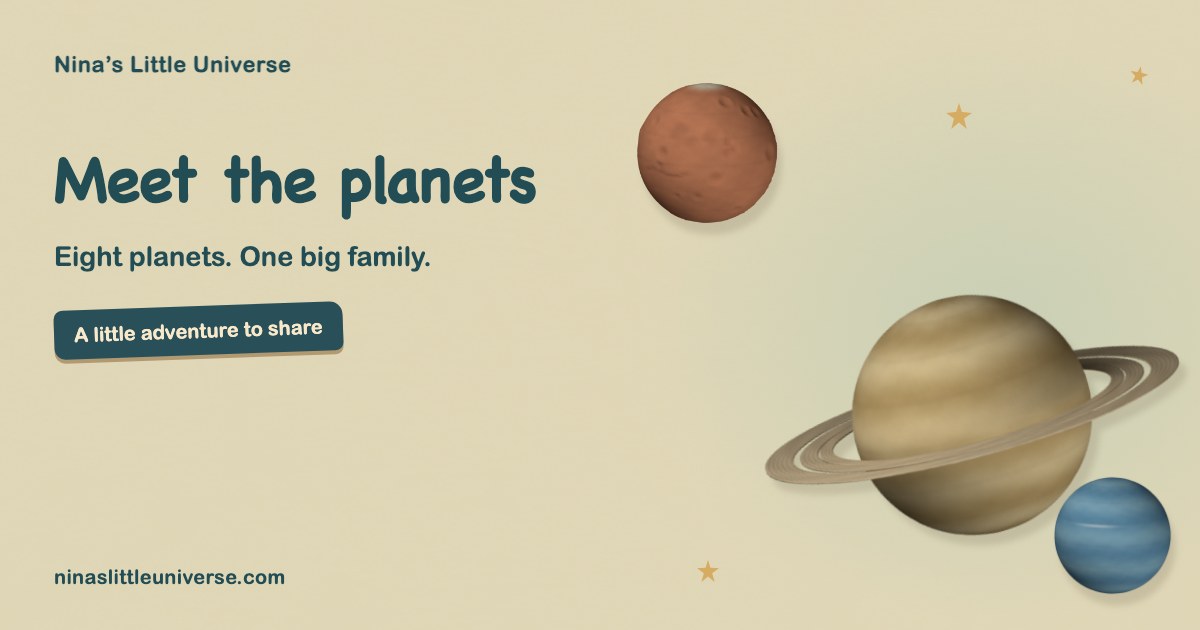
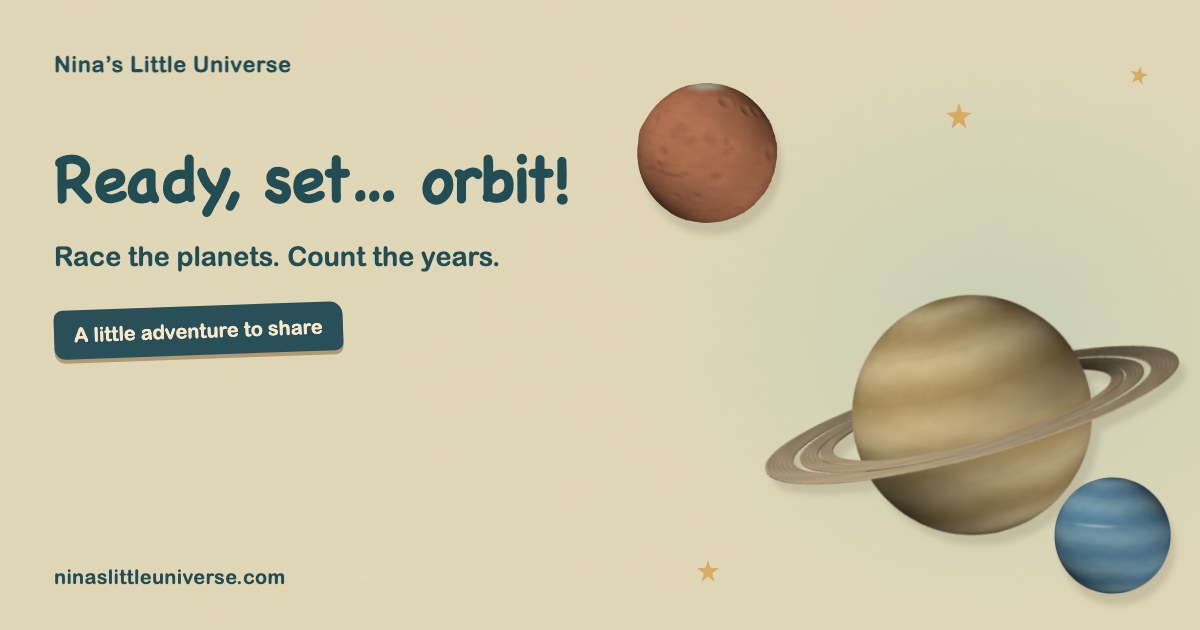
From the Sun outward, the planets are Mercury, Venus, Earth, Mars, Jupiter, Saturn, Uranus and Neptune. The four inner planets have rocky surfaces. Jupiter and Saturn are gas giants; Uranus and Neptune are ice giants. The Sun is a star, not a planet. Our solar system also includes moons, dwarf planets, asteroids and comets. Pluto belongs to the dwarf planet group.
Explore together
- Open Meet the planets and explore one world at a time.
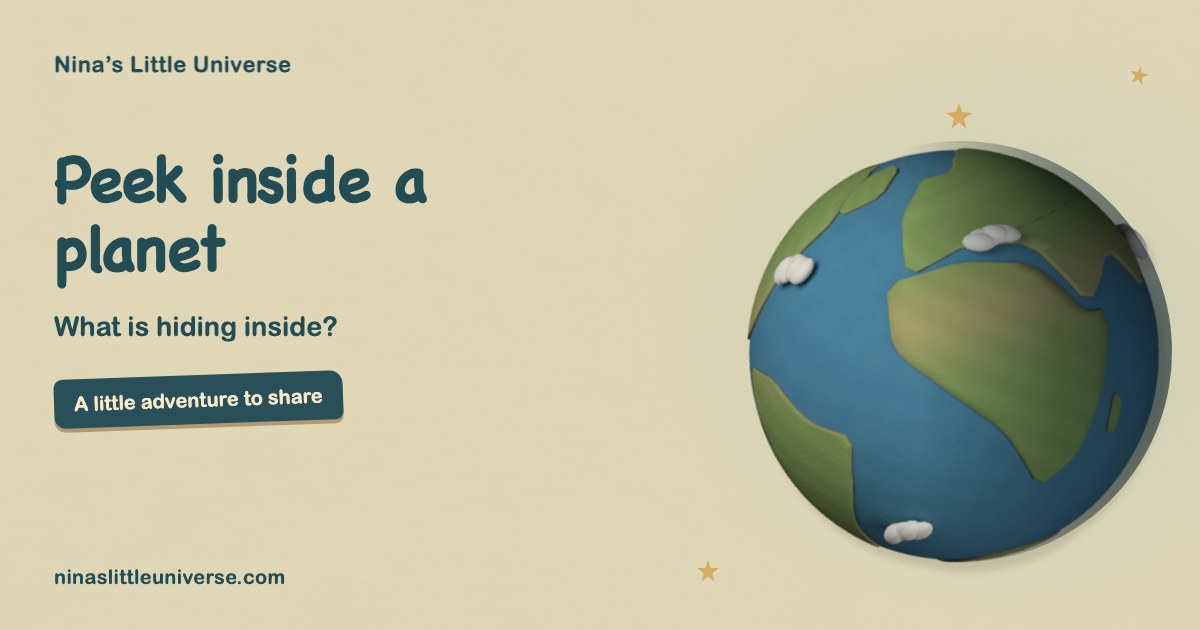
- Look for a detail that helps you recognize each planet, such as Saturn’s rings or Earth’s blue oceans.
- Compare two planets. Describe what looks similar and what looks different before choosing another pair.
One thing to remember
A model fits space onto a screen, so it cannot always show real sizes and distances together. The planets are much farther apart than a small picture suggests. Let children notice and ask questions before asking them to memorize all eight names. Finish by drawing a favorite planet and explaining one reason they chose it.
Science reference: NASA ↗Ready for your classroom
A ten-minute lesson to try together
Suggested ages 5-8, with adult support
Two A4 pages: a student worksheet, then the lesson and suggested answers. Print page 1 for children. Black-and-white friendly.
- What children will learn
- Children can locate Earth among the eight planets, recognize one feature of another planet, and identify the Sun as a star.
- What you need
- One shared screen, a pencil, and page 1 of the worksheet for each child or pair. No colour printing needed.
- 0-2 min
Find our home
Ask: Which planet do we live on? Show the eight names in order from the Sun. Count together until Earth, the third planet. Explain that the Sun is a star.
- 2-5 min
Meet two neighbours
Open Meet the planets. Select Earth and Saturn and look for a detail that helps identify each. Pause the automatic turn for a closer look. Invite one more planet choice and ask children to compare what they notice.
- 5-8 min
Draw a planet clue
Children circle Earth on the worksheet and add rings to Saturn. Each chooses two planets to draw in the boxes, adding a feature from the model. They can point to the printed names if writing them takes too long. Read the final choice aloud.
- 8-10 min
Share and check
Ask children to show one drawing and explain their planet clue. Check that they can find Earth and call the Sun a star. Remind them that the worksheet circles show order, not real sizes or distances.
Suggested answers & ways to adapt
- Earth is number 3 and Saturn is number 6. Circle Earth and draw rings around Saturn.
- Accept recognizable clues such as Earth’s oceans, Saturn’s rings, Mars’s reddish colour described in words, or Jupiter’s bands. Drawings need not be artistically accurate.
- The correct final choice is star. The eight planets are Mercury, Venus, Earth, Mars, Jupiter, Saturn, Uranus and Neptune.
For younger children, draw one planet and explain it aloud. For an extra challenge, ask a partner to identify a drawing from its feature before hearing the planet’s name. Saturn is not the only planet with rings.